Why Are Safeguards Under APES 110 Necessary?
Safeguards exist because independence risks are common in real audit environments, especially in SMSF audits. Accountants and auditors often deal with long-term clients, overlapping services, and internal firm pressures. These situations can create self-review, familiarity, or self-interest threats without anyone intending to breach ethical standards.
APES 110 does not expect professionals to eliminate all threats. Instead, it requires them to recognise those threats and apply safeguards that reduce risk to an acceptable level. In SMSF audits, safeguards help ensure that audit judgments remain objective and defensible. Regulators assess not only whether threats existed, but also whether appropriate safeguards were applied and documented.
Safeguards Under APES 110: What the Standard Actually Requires
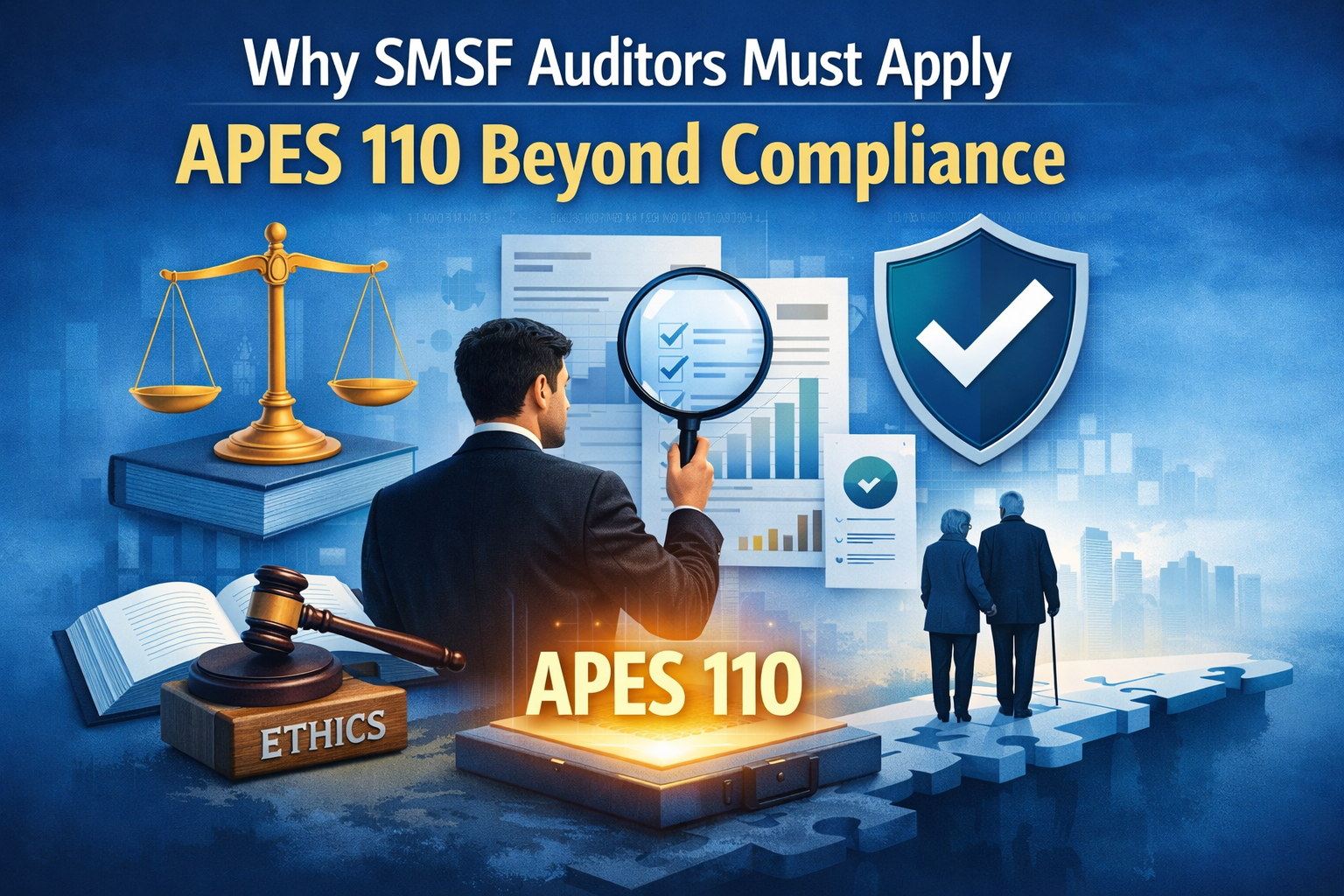
APES 110 recognises that independence threats are part of real-world practice. The standard does not demand perfection, but it does demand action. When a threat to independence is identified, accountants and auditors are required to apply safeguards that reduce that threat to an acceptable level — not just in theory, but in practice.
In SMSF audits, safeguards are particularly important because of the close working relationships that often exist between accountants, advisers, trustees, and auditors. Without deliberate controls, these relationships can easily create self-review or familiarity threats.
- Typical safeguards applied under APES 110 include:
- Engaging an auditor who has had no role in preparing the SMSF accounts
- Clearly separating audit work from accounting and advisory services
- Ensuring audit decisions are free from referral or commercial influence
These safeguards are not optional checkboxes. They must be relevant to the specific risk and strong enough to address it. If a safeguard does not genuinely protect independence, APES 110 expects the engagement to be reconsidered.
Equally important is documentation. Regulators assess not only whether safeguards were applied, but whether they were identified, implemented, and recorded properly. Without evidence, safeguards may as well not exist.
How to Apply APES 110 Safeguards in SMSF Audits?
Applying APES 110 safeguards in SMSF audits starts with recognising where independence threats actually arise. These threats are rarely abstract; they often appear when the same firm prepares accounts, provides advice, and maintains long-term relationships with trustees. Safeguards must be engagement-specific and targeted, not assumed to exist automatically across the firm.
The first step is identifying the threat. Once identified, the safeguard should directly address that specific risk. For instance, if a self-review threat exists, the auditor must not be involved in preparing or influencing the audited financial statements.
Practical measures often include:
- Outsourcing the SMSF audit to an independent auditor
- Clearly defining roles, responsibilities, and limitations in engagement letters
- Avoiding audit involvement in advisory or strategic decision-making
Safeguards must be applied before the audit begins and documented thoroughly. Regulators will examine both the presence and effectiveness of safeguards. If a threat cannot be adequately reduced, APES 110 requires that the engagement be declined.
Tips for Accountants to Maintain APES 110 Compliance
Maintaining independence under APES 110 is more than understanding the rules; it’s about embedding safeguards into everyday practice. Accountants often face competing pressures: tight deadlines, client expectations, and overlapping responsibilities. Without deliberate steps, even well-intentioned professionals can inadvertently compromise independence.
To make compliance manageable, focus on three key areas: awareness, application, and documentation. First, be aware of the types of threats, self-review, familiarity, self-interest, advocacy, and intimidation, and consider how they may appear in your SMSF engagements. Second, apply safeguards tailored to each threat. Third, document every safeguard applied, so regulators and clients can clearly see that independence was maintained.
Here’s a quick reference table for practical application:
| Threat Type | Practical Safeguard | Key Consideration |
|---|---|---|
| Self-review | Outsource audit or segregate roles | Auditor not involved in preparation |
| Familiarity | Rotate audit personnel | Avoid long-term single auditor-trustee pairing |
| Self-interest | Disclose financial relationships | Avoid incentives affecting judgment |
| Advocacy | Do not promote client positions | Maintain objectivity in audit reporting |
| Intimidation | Escalate pressures to senior management | Do not compromise on audit conclusions |
Applying these tips consistently ensures independence is not only maintained but clearly demonstrable. Small, deliberate steps can prevent major compliance issues down the line.
Ensure Compliance with APES 110 Safeguards
Independence is the cornerstone of every credible SMSF audit. APES 110 safeguards exist for a reason: to help accountants and auditors manage threats, protect objectivity, and maintain professional trust. Simply knowing the rules is not enough; they must be applied deliberately, proportionately, and documented clearly.
Partnering with experienced SMSF audit specialists or embedding robust internal safeguards allows your firm to:
- Reduce risks of self-review, familiarity, and other threats
- Demonstrate independence to regulators and clients
- Streamline audit processes without compromising compliance
Safeguards are not just regulatory obligations; they are practical tools that safeguard your reputation, your clients’ funds, and your professional integrity. Applying them consistently transforms compliance from a checklist into a reliable, defensible practice.
If your firm is looking to strengthen audit independence and ensure APES 110 compliance, now is the time to implement effective safeguards. Taking proactive steps today prevents potential issues tomorrow and builds long-term trust with SMSF trustees and regulators alike.