Why Preparation Matters More Than Ever
Earlier, Australians used to think of SMSF audit as just a yearly formality, but with each passing year, as the ATO scrutiny gets tougher, things have changed. Increased data matching and stricter compliance checks, preparation also plays a major role in how smoothly an audit is completed.
ATO compliance updates have shown that missing and incomplete documents have been the reasons for delays in the SMSF audits. In fact, auditors often raise management letters simply because records were unclear, unsigned, or not properly dated. Thus, accountants and SMSF auditors should ensure that all the right documents are ready before submitting files to the auditor. This can help in
- Reducing audit turnaround time
- Minimising audit queries
- Avoiding contravention reports
- Improving trustee confidence and compliance
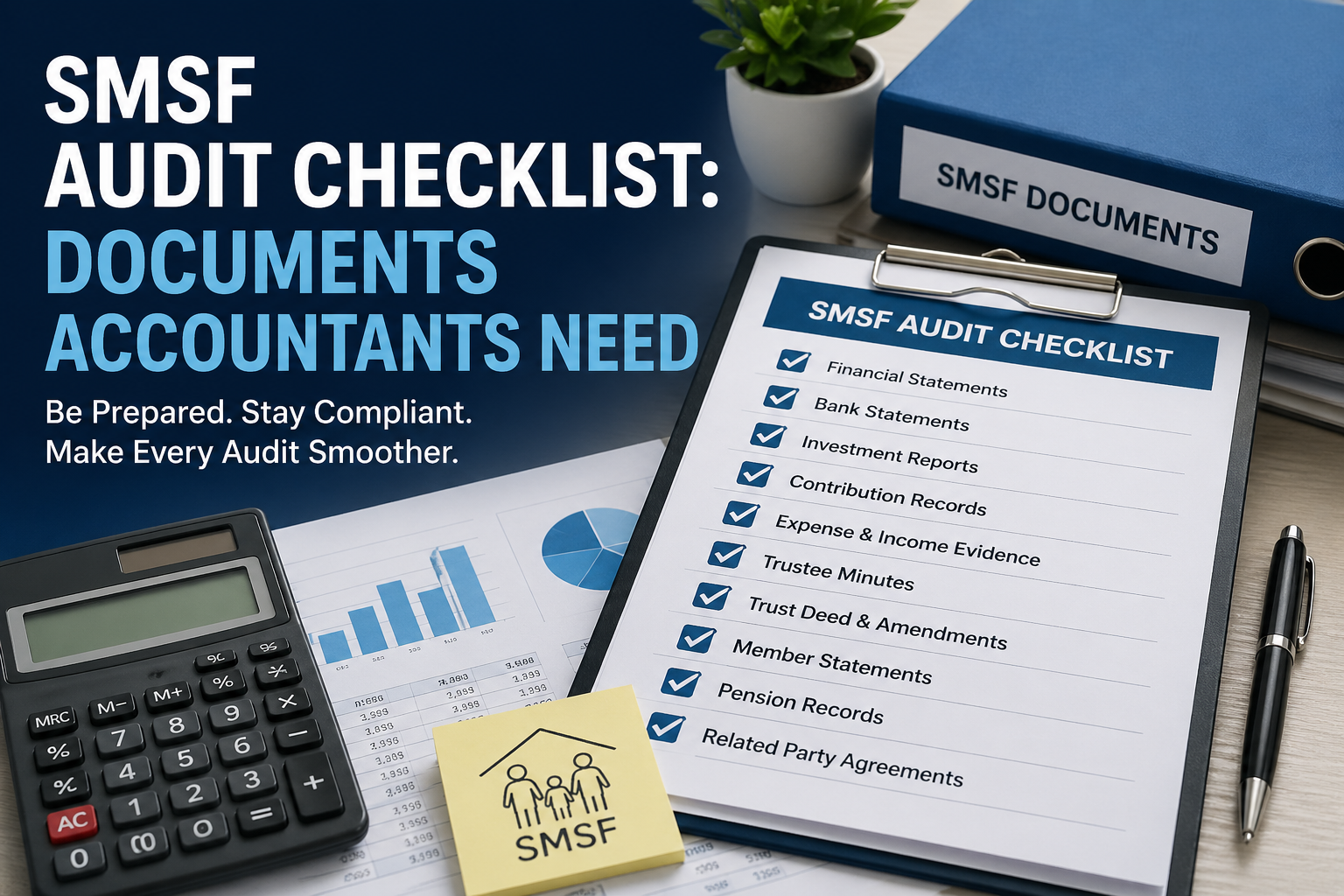
Therefore, this checklist breaks down exactly what documents auditors expect, organised in a practical, audit-ready way.
What are the Key Financial Documents?
In an SMSF audit, financial documents are considered the backbone. This is because of helps the auditor to confirm that the transactions of the funds are properly recorded, and compliant with superannuation law.
Here are some of the vital documents that play an important role in SMSF audit:
Annual Financial Statements – Auditors require complete and finalised financial statements for the relevant financial year. These should include:
- Statement of Financial Position
- Operating Statement
- Notes to the accounts
The figures in these statements must match the supporting bank statements, investment reports, and working papers. Even small mismatches often trigger audit queries.
Bank Statements for All SMSF Accounts – Provide full-year bank statements for:
- Transaction accounts
- Term deposits
- Cash management accounts
The auditor checks these to confirm contributions, benefit payments, expenses, and investment movements. It should be noted that any missing months or partial statements can slow down the audit process significantly.
Investment Statements and Reports – The auditors should have up-to-date documentation for each investment held by SMSF, such as:
- Share portfolio reports
- Managed fund statements
- Property rental statements
- Cryptocurrency exchange reports (if applicable)
Thus, each investment must be clearly held in the SMSF’s name, not in a trustee’s personal name.
Contribution and Rollover Records – This helps auditors verify compliance with contribution caps and member allocations. This includes:
- Contribution summaries
- Employer contribution confirmations
- Roll over benefit statements from other super funds
- Dates matter here. Late or misclassified contributions are common compliance issues.
Expense and Income Evidence – Invoices, receipts, and income records support the fund’s operating expenses and earnings. Auditors use these to confirm:
- Expenses are fund-related
- Income is correctly reported
- No personal expenses are paid from SMSF accounts
Member-Related Records
Financial documents help in creating a clear understanding of what has happened throughout the years, and member-related records help in explaining why decisions were made. In addition, it also describes who is being affected by these decisions. These documents clearly depict governance, trustee intent, and compliance with superannuation law.
Therefore, before an audit begins, accountants should ensure that records provided by all members and trustees are current, properly executed, and aligned with the fund’s activities. This is because auditors are going to rely on these records to confirm that the SMSF is being managed according to its governing rules and legislative obligations.
| Document Type | What the Auditor Reviews | Why It Matters |
|---|---|---|
| SMSF Trust Deed and Amendments | Governing rules, update history, execution dates | Confirms the fund is operating within its legal framework |
| Investment Strategy | Risk profile, asset allocation, liquidity planning | Demonstrates informed trustee decision-making |
| Trustee Declarations | Completion dates and signatures | Confirms trustee’s understanding of obligations |
| Trustee Minutes and Resolutions | Major decisions and approvals | Provides evidence of active fund management |
| Pension Commencement Records | Start dates and terms | Validates pension status and compliance |
| Member Balance Statements | Opening and closing balances | Ensures proper allocation of benefits |
| Related Party Agreements | Lease or loan terms | Confirms arm’s length compliance |
On combining all these aspects, it is clear that SMSF is not only financially sound but also properly governed. Any case related to missing signatures, outdated strategies, or undocumented decisions can lead to audit qualifications or compliance concerns. Thus, by keeping member-related documentation up to date, auditors get to form a clear view of trustee intent and fund operation.
Audit-Ready Checklist Summary
Once all financial and member-level records are compiled, the final step is ensuring they are organised in a way that allows the audit to progress without interruption. An audit-ready file follows a logical sequence, where figures in the accounts can be directly traced to source documents and trustee decisions can be clearly linked to supporting records. This structured presentation reduces the need for follow-up requests and allows auditors to complete their review within expected timeframes.
For accounting firms, using a checklist at this stage acts as a practical control measure rather than a compliance exercise. It helps confirm that documents are current, approvals are properly executed, and reporting aligns with the fund’s actual activity for the year. When this review is completed before lodgement, audits tend to move forward smoothly, trustee communication improves, and the risk of last-minute corrections or compliance concerns is significantly reduced.
Final Thoughts
Preparing SMSF audit files does not need to be complicated or time-consuming. To support accountants and SMSF administrators, we provide an SMSF Audit Checklist that clearly outlines the relevant documents required before lodging files with an auditor. It is designed to save time, reduce audit queries, and improve overall audit outcomes.
This checklist is especially useful for firms managing multiple SMSFs or trustees who want clarity around compliance expectations. Reach out to us today and make your next SMSF audit smoother, faster, and stress-free.