Why Outsourcing SMSF Audits Matters More Than Ever
SMSF audits are no longer a routine, tick-the-box exercise. The regulatory environment has shifted, and with that shift has come far greater scrutiny of auditor independence. What may have passed unnoticed a few years ago is now being actively questioned by regulators.
Many accounting and advisory firms still operate under tight internal workflows, where SMSF accounting, administration, and auditing sit close together. On paper, firms may believe they have adequate safeguards. In practice, however, independence risks often creep in quietly, through familiarity with trustees, repeated engagements, or reviewing work prepared by colleagues within the same firm.
This is where outsourcing SMSF audits becomes important. Not as a convenience, and not purely as a capacity solution, but as a deliberate step to protect independence under APES 110. Outsourcing creates distance. It introduces objectivity. And most importantly, it provides clear evidence that independence has been taken seriously, not just assumed.
Understanding Independence Rules Under APES 110
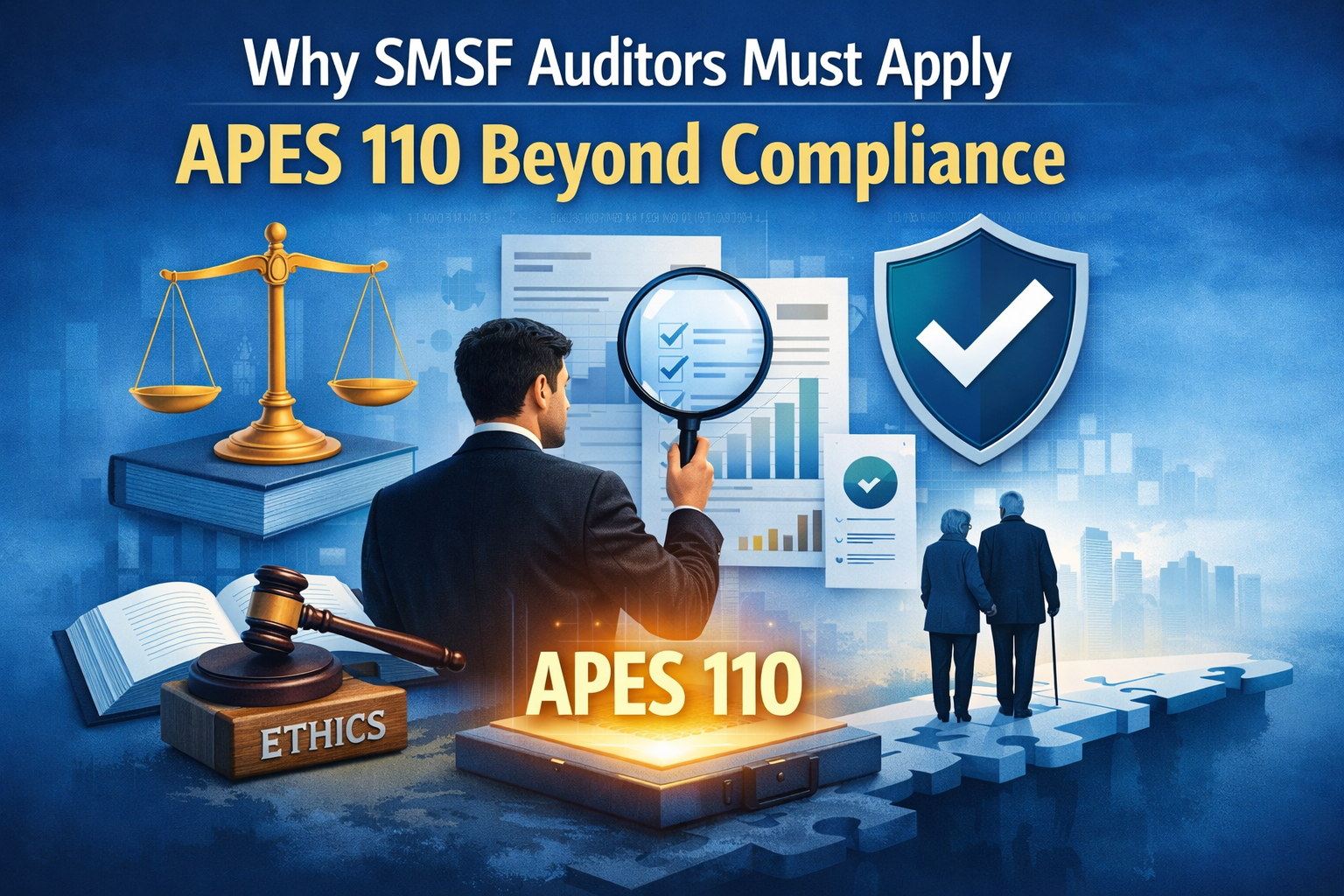
APES 110 sets out the Code of Ethics for Professional Accountants, and independence is a core requirement for any assurance engagement, including SMSF audits. The standard does not allow for flexible interpretation when it comes to conflicts of interest.
Independence under APES 110 has two equally important aspects:
- Independence of mind – it is the ability to make unbiased judgments
- Independence in appearance – It is to avoid situations where objectivity could reasonably be questioned
Even if an auditor believes they are acting impartially, APES 110 makes it clear that perception matters. If a third party could reasonably doubt independence, the standard is not met. APES 110 identifies five primary threats to independence:
- Self-review threat is auditing financial statements or compliance work prepared by the same firm
- Familiarity threat means close or long-standing relationships with trustees or advisers
- Self-interest threat is financial dependence on a client or referral source
- Advocacy threat is promoting or defending a client’s position
- An intimidation threat is pressure to compromise professional judgment
In SMSF audits, self-review and familiarity threats are the most common and the most difficult to defend if challenged.
Where Independence Issues Commonly Arise in SMSF Audits
Independence issues rarely arise from intentional misconduct. They usually stem from structural setups within firms. Common scenarios include:
- The same firm is preparing SMSF accounts and conducting the audit
- Long-term client relationships where auditors become too familiar with trustees
- Pressure to maintain referral relationships with advisers
- Informal internal reviews instead of truly independent audits
Over time, these situations weaken professional scepticism. Auditors may rely too heavily on prior-year work or assumptions. From a regulatory perspective, this is exactly what APES 110 is designed to prevent.
How Outsourcing SMSF Audits Removes Independence Threats
Outsourcing SMSF audits directly addresses the key threats identified under APES 110 by separating audit work from preparation and advice.
- When an audit is outsourced to an independent SMSF auditor:
- The self-review threat is removed, as the auditor has no involvement in preparing the accounts
- Familiarity threats are reduced, particularly in long-standing client relationships
- Audit judgments are made without internal or commercial pressure
- Professional scepticism is naturally stronger
- Independence can be clearly demonstrated in documentation
External auditors are also more likely to ask difficult questions, request additional evidence, and report contraventions where necessary. This is not a weakness of outsourcing; it is its strength.
Why Regulators Prefer Independent, Outsourced Audits?
From a regulatory standpoint, outsourced SMSF audits provide clarity. They make it easier to assess whether independence requirements have been met.
When independence is challenged, regulators typically examine:
- Who prepared the financial statements
- Whether the auditor had any commercial or personal ties to the client
- The nature of referral or fee arrangements
- How independence threats were identified and managed
Outsourcing simplifies these answers. It shows that independence was built into the engagement structure from the outset, rather than managed retrospectively.
Benefits of Outsourcing for Accountants and Advisers
Outsourcing SMSF audits is not only about protecting the auditor. It also provides tangible benefits for accounting and advisory firms.
Key benefits include:
- Reduced risk of APES 110 breaches
- Lower exposure to regulatory action or disciplinary reviews
- Clearer engagement boundaries
- Stronger audit reports and documentation
- Improved client confidence
Many firms also find that outsourcing improves workflow efficiency. Internal teams can focus on advisory services, while audit specialists handle compliance independently and thoroughly.
Benefits for SMSF Trustees
Trustees also benefit from outsourced SMSF audits, even if they are not always aware of it.
Independent audits often lead to:
- Earlier identification of compliance issues
- More transparent audit findings
- Better understanding of trustee obligations
- Reduced risk of ATO penalties
An independent auditor has no incentive to overlook problems. That independence protects the fund, not just the professionals involved.
Engage With Us for SMSF Audit Independence
Maintaining independence under APES 110 requires more than good intentions. It requires structure, separation, and consistency.
By engaging with a dedicated, independent SMSF audit provider, firms can:
- Meet APES 110 independence requirements with confidence
- Reduce compliance and reputational risk
- Deliver audits that withstand regulatory scrutiny
- Strengthen long-term professional relationships
Outsourcing SMSF audits is no longer just best practice. In today’s regulatory environment, it is one of the most reliable ways to ensure independence is preserved and clearly demonstrated.