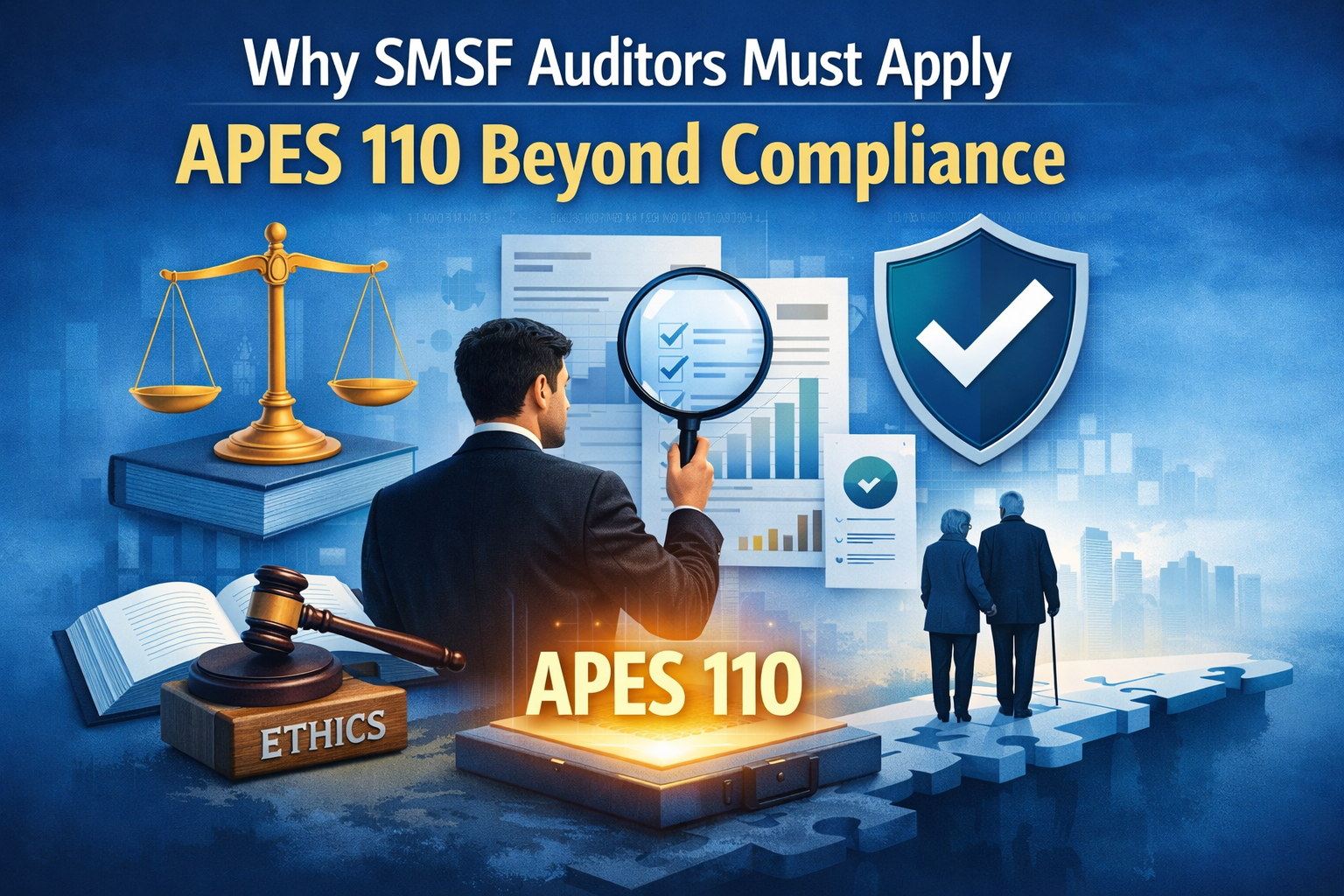
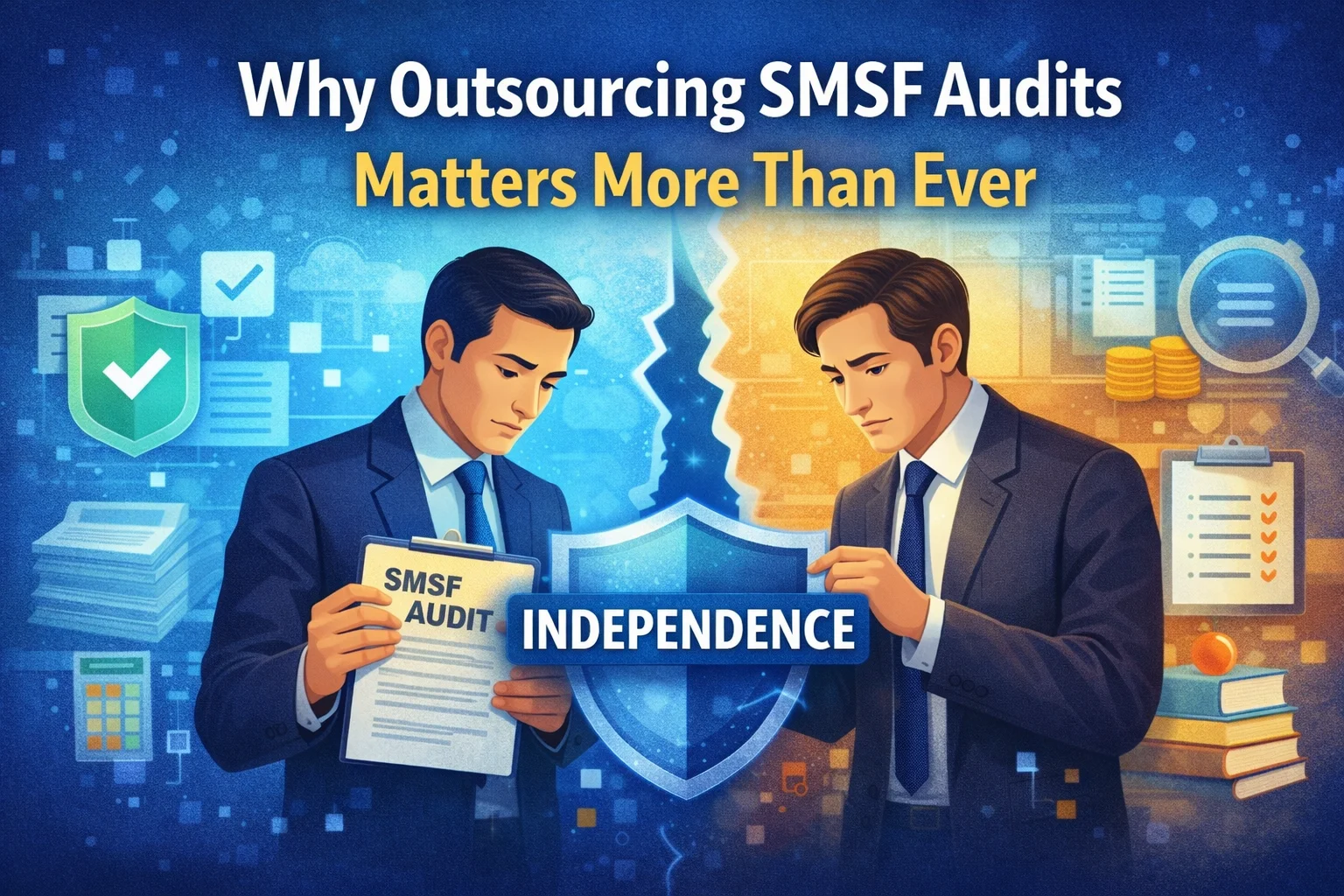
The role of APES 110 SMSF auditors is more than just simply satisfying minimum regulatory requirements. While compliance ensures that an SMSF audit meets basic legal standards, APES 110 imposes a higher obligation focused on ethics, professional judgment, and long-term trust. In an increasingly regulated and closely monitored SMSF environment, auditors who apply APES 110 beyond compliance play a vital role in protecting trustees. In addition, it helps in strengthening confidence and safeguarding the integrity of the entire superannuation system.
In this blog, we are going to cover why the ethical application of APES 110 matters and how it goes beyond technical compliance. Moreover, this blog will also cover the benefits it delivers to both auditors and trustees over the long term.
Ethics Versus Minimum Compliance in SMSF Auditing
Minimum compliance in SMSF auditing is primarily concerned with meeting statutory obligations. This includes
- Completing required audit procedures
- Reviewing documentation
- Identifying breaches under the SIS Act and SIS Regulations
- Issue reports within prescribed timeframes
All these steps are essential; however, they do not fully capture the ethical responsibilities expected of SMSF auditors. Under APES 110, ethics is defined well beyond procedural accuracy. It requires auditors to act with integrity, objectivity, professional competence, confidentiality, and professional behaviour.
These principles guide how decisions are made, especially in situations where rules may technically be met but ethical concerns still exist.SMSF auditors are therefore expected to evaluate not only whether something is allowed, but whether it is appropriate, independent, and in the best interest of the fund members.
This distinction is critical because compliance alone cannot prevent conflicts of interest, familiarity threats, or compromised independence. Ethical judgment fills the gap where checklists fall short.
Beyond Compliance: Embedding Ethical Judgment into Every Stage of the Audit Process
Applying APES 110 beyond compliance means inculcating ethical thinking into every stage of the audit process. It requires auditors to continuously assess threats to independence, objectivity, and professional judgment rather than relying solely on formal declarations or standard procedures.
In practice, this means ethical threats are to be recognized by auditors, along with evaluating their significance. The associated threats may arise from long-standing relationships with trustees or accountants, pressure to issue clean audit opinions, or commercial incentives to retain clients.
Therefore, APES 110 SMSF auditors go beyond compliance and are prepared to make difficult decisions. It includes declining or resigning from engagements where ethical risks cannot be adequately managed. This proactive approach protects not only the auditor but also the trustee and the credibility of the audit opinion itself.
Independence as an Ethical Principle, Not a Formality
Independence is one of the most critical elements of APES 110, yet it is often misunderstood as a simple procedural requirement. In reality, independence under APES 110 has two dimensions: independence of mind and independence in appearance.
Independence of mind refers to the auditor’s ability to form an unbiased opinion without being influenced by relationships or external pressures. Independence in appearance focuses on how those relationships may be perceived by third parties, including regulators. Even if an auditor believes they can remain objective, a perceived conflict can still undermine trust.
APES 110 SMSF auditors who apply the standard beyond compliance understand that independence is not proven through paperwork alone. It is demonstrated through consistent ethical behaviour, transparent decision-making, and a willingness to avoid engagements that could compromise professional judgment.
Professional Skepticism as a Core Ethical Responsibility
Professional skepticism is a key ethical requirement under APES 110 and a defining trait of high-quality SMSF audits. It requires auditors to maintain a questioning mindset, particularly when reviewing trustee representations, related-party transactions, and unusual investment structures.
Rather than accepting information at face value, ethical SMSF auditors critically assess evidence, seek corroboration, and remain alert to inconsistencies. This approach is especially important in SMSFs, where trustees have significant control and complex arrangements are common.
By applying professional skepticism beyond minimum compliance, APES 110 SMSF auditors help identify issues early, reduce the risk of undetected breaches, and provide more reliable audit outcomes for trustees and regulators alike.
Benefits for SMSF Trustees and Accounting Firms
- It gives greater confidence that the SMSF audit reflects the true compliance position of the fund
- Issues can be detected early so that they can be corrected before becoming serious problems
- Clearer and more practical audit findings that are easier to understand and act on
- It can reduce the risk of penalties, rectification directions, or regulatory scrutiny
- There build a stronger trust between auditors, accountants, and trustees throughout the audit process
- Lower chance of disputes due to transparent and independent audit practices
- Better decision-making based on accurate and unbiased audit outcomes
- Governance and compliance culture can be improved over time
- Long-term protection of fund integrity and financial security for members
Choose Ethical SMSF Auditors You Can Trust
Whether you are an SMSF trustee or an accounting firm, working with ethical auditors makes a measurable difference. Auditors who apply APES 110 beyond compliance provide stronger protection, clearer insights, and greater peace of mind. If you value independence, integrity, and long-term trust, choose APES 110 SMSF auditors who put ethics at the centre of every audit engagement.