Over the past few years, SMSFs have become a preferable choice among Australians. This is so because it gives more power to control their retirement savings. SMSF’s needs to be audited every year. Thus, in this world of the SMSF, independence is considered the cornerstone of trust. For this auditing, you have to rely on accountants who make unbiased, objective decisions. However, maintaining independence can be challenging, especially when personal, financial, or professional relationships become involved.
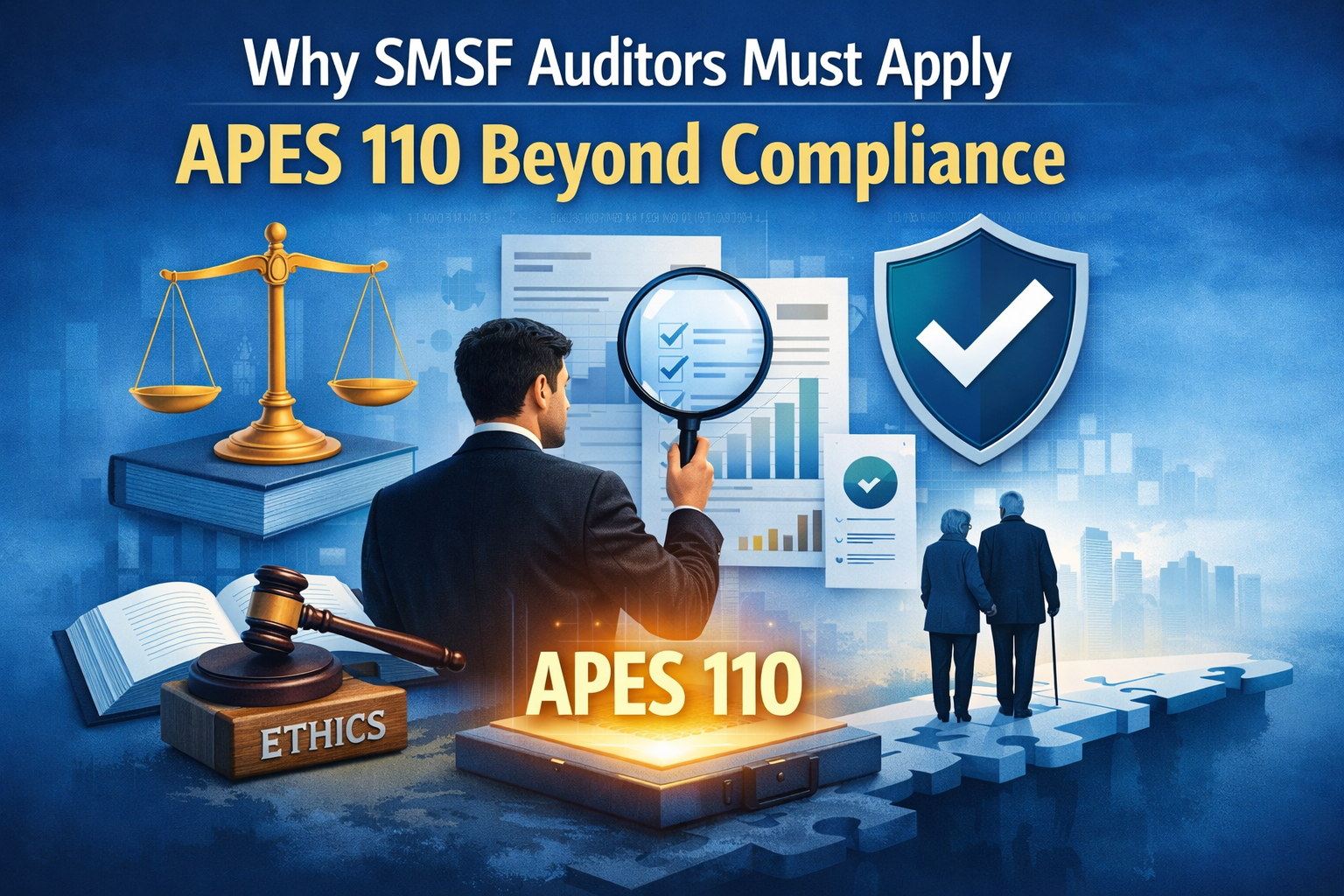
The APES 110 Code of Ethics for Professional Accountants outlines several independence threats that accountants must identify and manage to uphold ethical and professional standards. Understanding these threats is crucial, particularly for SMSF auditors, whose work demands absolute objectivity and compliance with APES 110 independence threats guidelines.
Major Threats to Independence Under APES 110
The APES 110 Code has outlined various threats that can compromise the independence of the accountant. Some of the common ones are discussed in this blog.
Self-Interest Threat
This type of threat arises when an accountant’s personal or financial interests conflict with their duty to remain objective. This directly conflicts with the major factor of SMSF audit, that is, independence of maintaining integrity and objectivity. Its examples are as follows:
- You hold a share or have any financial interest in your client’s business.
- Depending on significant fees from one client
- Acceptance of gifts, bonuses, or any hospitality from the client
- Neglecting issues because of fear of losing them.
Even if you manage to meet these conditions, you still may hamper the overall credibility by creating an appearance of bias.
Familiarity Threat
When an auditor gets too comfortable with their client or gets emotionally connected, thereby reducing professional scepticism generates a threat to independence called Familiarity Threat. The examples that lie under this are:
- Long-standing professional relationships with a client
- Family or close personal connections with client personnel
- Trust built over the years, leading to complacency
This case arises when either the auditor has some personal relationship with the client or has audited the same fund for an extended period. Therefore, rotation, peer review, and consultations are suggested by APES 110 to mitigate such threats.
Advocacy Threat
Promoting or defending the interests of the client, such that the important factor of independence gets compromised. This jeopardy comes under Advocacy Threat. Its examples are:
- Representing a client during disputes or negotiations
- Promoting or marketing a client’s business
- Supporting a client’s legal or tax position in public forums
These types of involvement make it difficult to stay objective when later providing assurance services. Thus, under APES 110, there should be avoidance of such rules by accountants in which they appear to advocate for clients, ensuring impartiality is never questioned.
How Safeguards Under APES 110 Protect Independence?
Several factors fall under the APES 110 Code of Ethics to help accountants and auditors identify, evaluate, and address independence threats. It can include self-interest, familiarity, and an advocacy threat. Overcoming these threats could lead to the maintenance of ethical standards and objectivity of professional judgments.
There are some safeguards that generally operate at different levels to protect either from threats or reduce them to an acceptable level.
- The first one is firm-level safeguards, which include policies, ethical leadership, monitoring, and staff training to ensure independence.
- Then there come engagement-level safeguards. This involves independent reviews, auditor rotation, expert consultation, and limiting extra client services.
- Oversight from APESB, ASIC, and ATO, plus regular training and peer reviews, falls under the safeguard called professional safeguard.
- The last one is an individual safeguard that involves avoiding conflicts, disclosing relationships, and staying professionally sceptical.
On compiling these points, there forms an ethical foundation of professionalism. Applying these measures is considered to be crucial for the SMSF auditors. This is so to ensure independence, transparency, and compliance with regulatory expectations, thereby protecting both the integrity of the audit and the trust of clients.
Engage With Independent Auditors
By engaging with an independent auditor like SMSF Audits Pty Ltd, you can be assured that your SMSF audit will be conducted with complete objectivity, transparency, and professionalism. Adherence to independence is our utmost priority to not just offer compliance, but also trust and confidence with each trustee we work with. Hence, protect your fund’s integrity and engage with independent SMSF auditors who uphold the highest ethical standards.
Frequently Asked Questions
Q1. Explain the role of APES 110 in accounting.
A: Its main purpose is to set ethical standards that promote integrity, objectivity, and independence in all professional accounting work.
Q2. How often should accountants assess independence threats?
A: The accountants should evaluate threats to independence before accepting, during, and after each engagement.
Q3. Why is independence crucial in SMSF audits?
A: Independence in SMSF is mandatory because it ensures the auditor’s opinion is unbiased, protecting trustees and maintaining compliance with ATO and APES 110 requirements.
Q4. Who enforces compliance with APES 110 in Australia?
A: Compliance is overseen by professional bodies like APESB, CPA Australia, CA ANZ, and regulators such as ASIC.
Q5. Does providing tax services to an audit client create an independence threat?
A: Yes, offering tax or financial services to an audit client can lead to self-review or advocacy threats under APES 110.